

By Elizabeth Menshikova, VP Sales at b2match
Ask attendees why they register for your events and the #1 answer is usually “to meet just the right people”. Content usually ranks second, and coffee is somewhere under on the list.
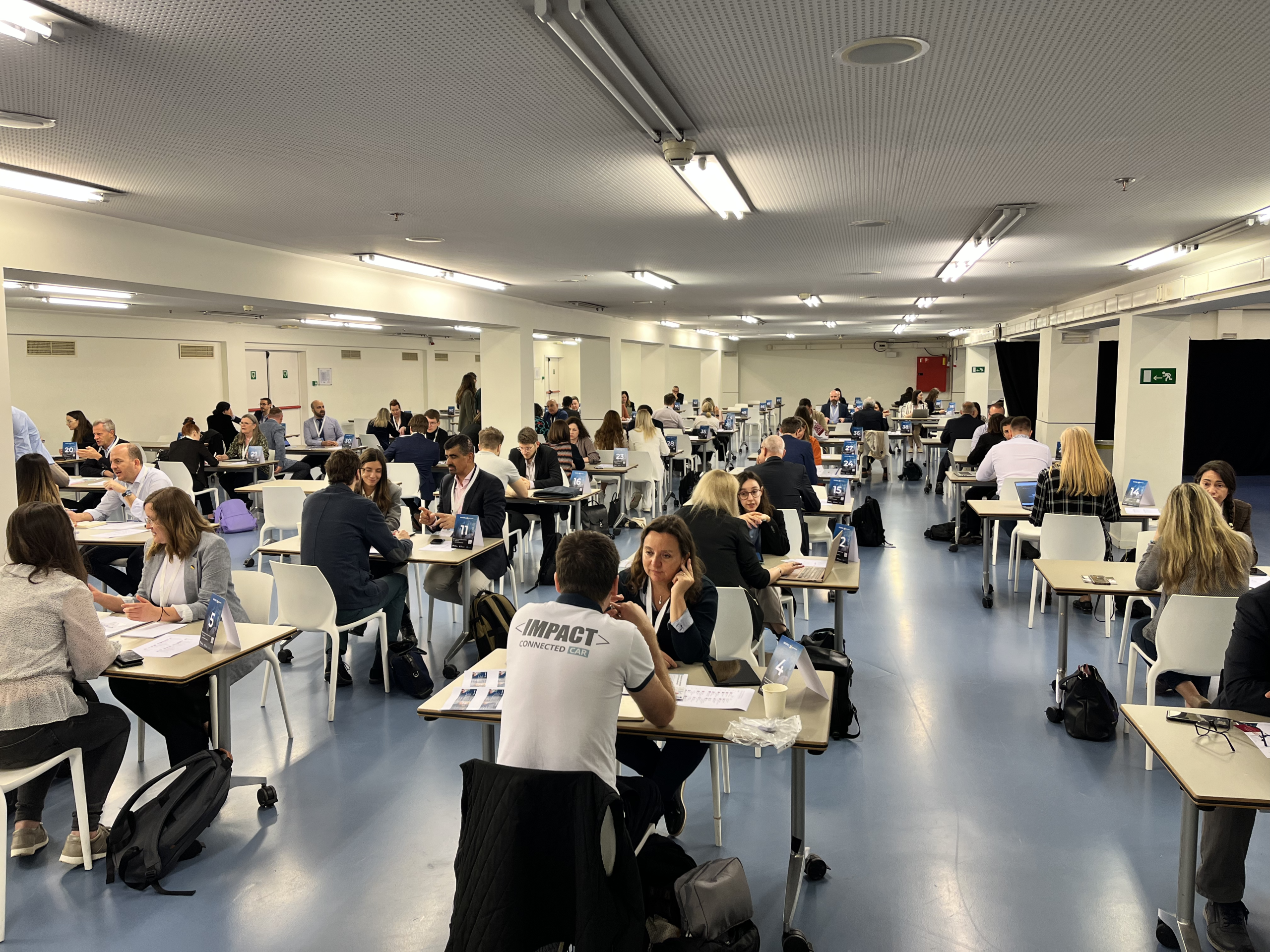
Now look at what you’re actually asking them to do. A 500-person event holds 124,750 possible 1:1 pairings. Give an attendee two free hours, and they can screen maybe 30 profiles. Somewhere in the gap between what’s possible and what’s humanly doable, most of the networking value of an event quietly disappears.
At b2match, we’ve spent over 13 years working on one thing: making matchmaking actually effective. AI is the first technology we’ve seen that actually closes that gap, instead of just describing it.
AI does the legwork, people make the call.
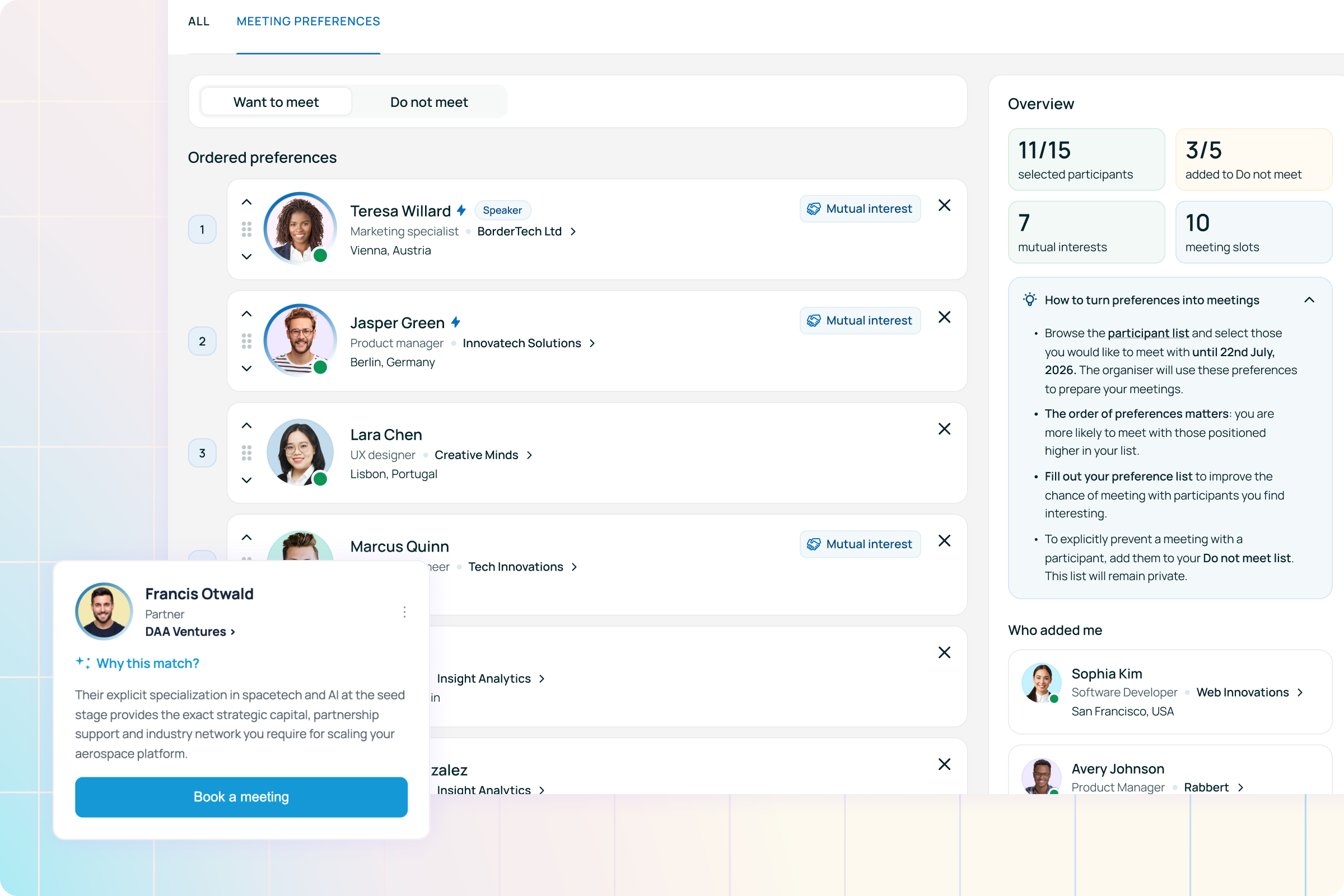
A matchmaking engine looks at what each participant offers and what they’re looking for, watches live behaviour (who requests meetings, who accepts, who declines), and hands every attendee a short list of people worth their limited hours.
One design choice matters more than anything in this model: the system suggests, but the attendee decides. Business relationships start with consent, and auto-scheduled meetings without it teach people to skip meetings altogether.
Internally, we sum this up in our motto “Smart in planning, human in approach”. The algorithm handles the 124,750-pair math no person could ever do by hand in a time crunch. The people still do the final handshake.
What the numbers say.
Running matchmaking across more than a thousand events a year means we get to watch the same pattern play out in very different rooms — from cluster meetings to startup conferences. And the pattern holds: meeting rates rise up to 30% when participants follow AI recommendations rather than browsing participant lists on their own.
“The clearest shift is in who participates. At events using the recommender, 33% more participants request at least one meeting. The suggestions give people a concrete reason to reach out, and that first request is the hardest step in networking.”
– Grgur Tustonjic, Product Manager at b2match
The effects that matter most, though, are the ones organizers feel in their budget. Exhibitors who leave with a full meeting calendar are exhibitors who come back next year. Sponsors get hard numbers to point to instead of secondhand impressions. And the event’s overall “was this worth it” score climbs with it.
“My attendees won’t use it”.
This is the objection we hear most at b2match, usually about senior or less digital audiences. It’s a fair worry, and two things reliably put it to rest.
First, explainability. Acceptance rates climb when people can see why they were matched. “You both work on hydrogen storage” lands better than a mystery suggestion. Without that reasoning visible, attendees tend to treat recommendations as spam.
Second, profile quality. Treat the registration form like a dataset: specific “offering” and “seeking” fields always outperform a free-text bio. Lazy questions in, strangers recommended to strangers out — no algorithm can rescue a bad form.
4 questions to ask any vendor (ours included).
- Which single metric should this improve, and what’s the baseline?
Meetings per participant and acceptance rate are the honest answers. - Where is participant data processed and stored?
Under GDPR, the organizer is the data controller, and the EU AI Act adds transparency duties for recommendation systems. EU-based processing simplifies both. - Can attendees see why they got a recommendation?
- What happens at 50 registrations instead of 5,000?
Cold-start behaviour separates mature engines from demos.
Where to start.
Plenty of AI at events saves the organizer’s own hours: from home page drafts to email copy. Useful, and invisible to attendees.
Matchmaking AI is the piece attendees actually feel. It shapes what they say about your event afterwards, and whether they bring a colleague next year. If you’re only testing one AI use case this season, test this one, and pick your success number before you sign anything.
Elizabeth Menshikova
VP Sales at b2match
www.b2match.com
elizabeth.menshikova@b2match.com
Sponsored Content

Author: Guest Author
This post is by a guest author for eventindustrynews.com If you would like to feature as a guest author please contact us by emailing features@eventindustrynews.com